Monipuri weaving belongs to the Manipuri community, who live mostly in the Sylhet region of Bangladesh, around Moulvibazar. Weaving has long been part of daily life in Manipuri homes, and the craft is passed down within families, mostly among women.
The handloom
A Monipuri saree is woven on a handloom, thread by thread. The weaver sets up the long warp threads first, then passes the weft across by hand, row after row. Patterns are built into the cloth as it is woven, not printed on afterwards. That is why you can see the motif from the back of the fabric as well.
Handloom weaving is slow. A machine can produce cloth far faster, but it cannot easily make the small irregularities that give handwoven cloth its texture. Look closely at a Monipuri saree and you will see them: the tiny shifts in the weave that show a person made it.
The temple border: Moirang Phee
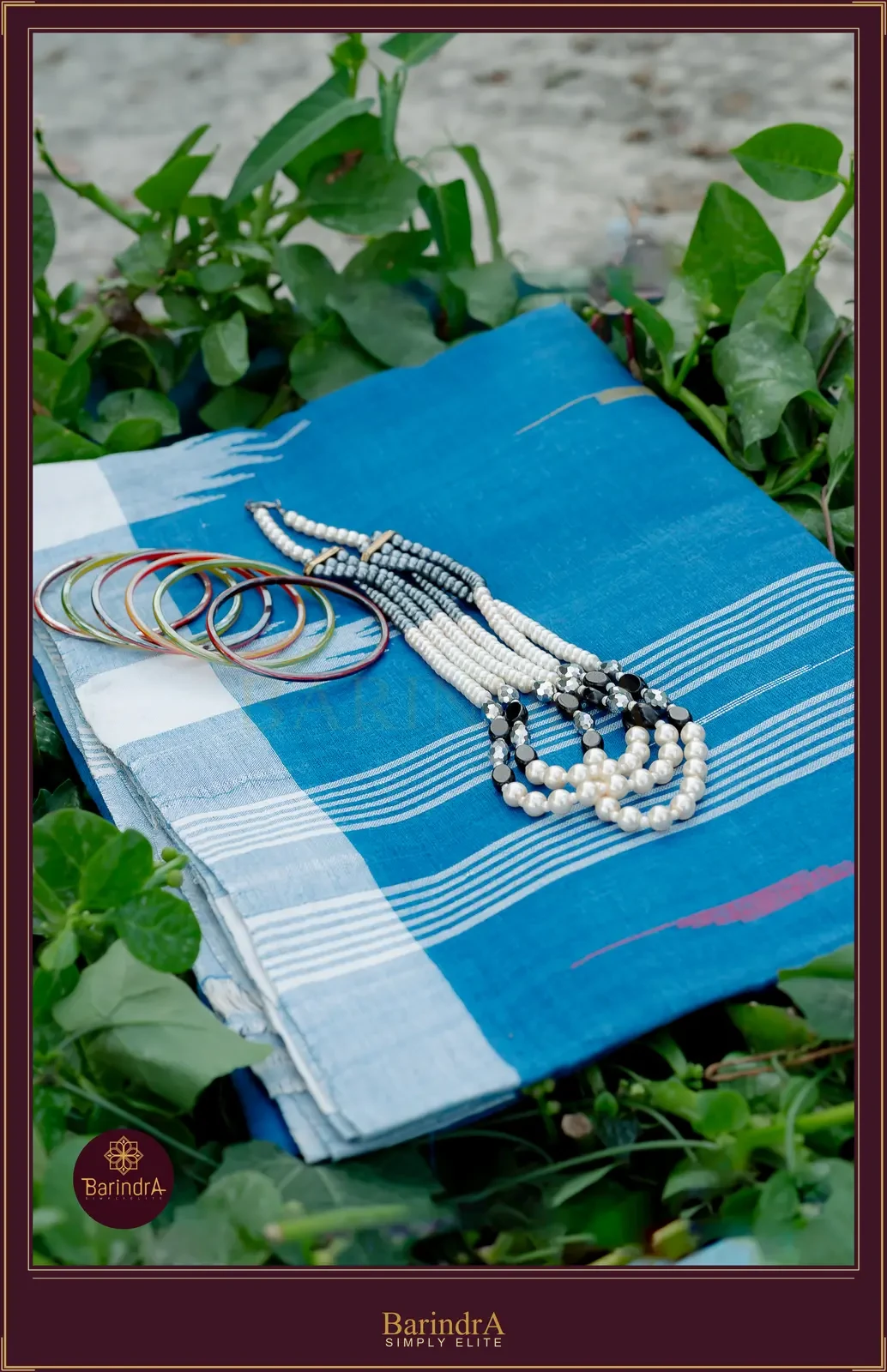
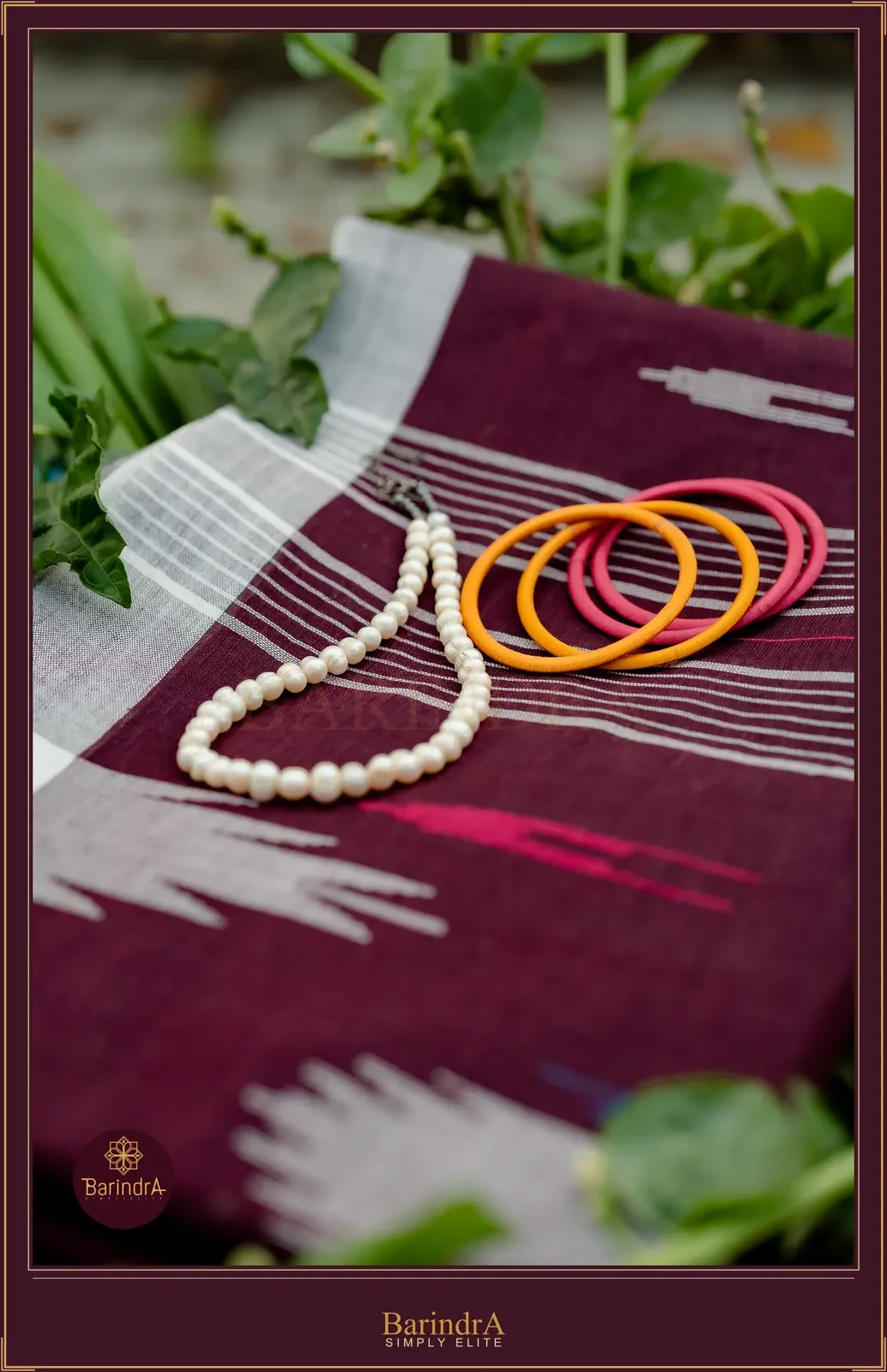
The most recognisable Monipuri pattern is a row of small triangles, like temple roofs, running along the border. It is known as Moirang Phee. On all six of our Monipuri sarees, this border is woven in a contrasting colour, usually white, so it frames the saree clearly.
What to look for when you buy
- The motif should be woven, not printed. Turn the fabric over. A woven motif shows on the back too, often with loose threads; a printed one barely shows.
- The fabric should feel firm but not stiff. Handloom cotton has body, and it softens with washing.
- Small variations are normal. Slight differences in line thickness are a sign of hand weaving, not a fault.
Every Monipuri saree in our Monipuri collection is premium cotton handloom, 13.5 haat long, with an unstitched blouse piece.
Our favourite way to see the weave is in daylight. The Teal Blue and Royal Purple sarees show the contrast of the white border best.
Questions about a saree, a colour or delivery? Message us on WhatsApp at +880 1818-626511 or write to [email protected].